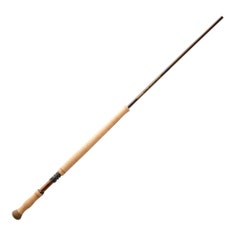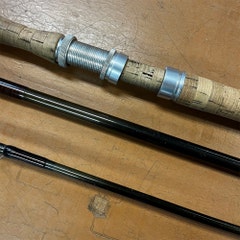
A Guide to Choosing a Double-Handed or Switch Fly Fishing Rod
Double-Handed Fly Rods
Newcomers to salmon fishing, and particularly those who have trout fished, will often ask why it is necessary to use a double-handed rod. The answer to this is firstly that in certain instances it’s not! Small rivers, lochs and big rivers in very low water are often better approached with a single-handed rod - say a 10’ 7wt. This will allow a more gentle presentation of the fly at close quarters in shallow water.
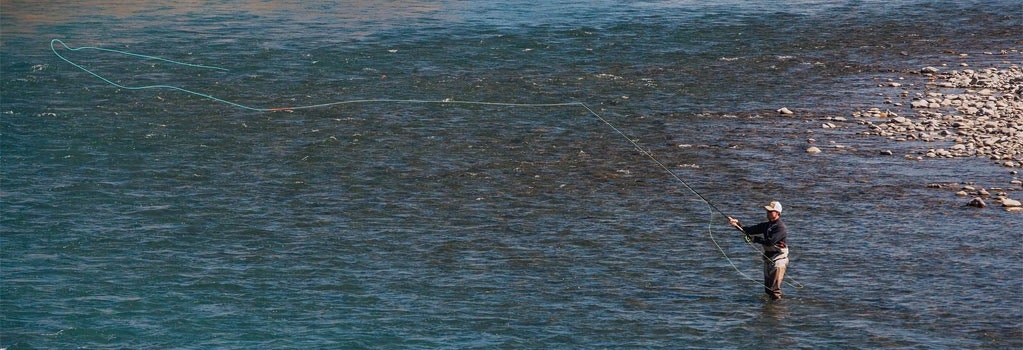
However, double-handers come into their own when you need to lift longer lengths of line, control and mend the line as it crosses the stream and fish with large heavy flies. Most DH rod ranges include models from 13’ through to 15’, longer rods are available but increasingly the trend is towards shorter lighter rods. The main reason for this is the huge improvements that have been made in speycasting lines in all their various styles making it easy to cast good fishing distances with the minimum of physical effort.
What is a Switch Rod?
Switch Rods are a relatively new concept and have become very popular in recent years. In reality there are only two groups of fly rods – single and double-handed. Switch rods are short double-handed rods (11’-12’) that give the option of casting single-handed should the need arise (hence ‘switch’). Any salmon or sea-trout angler will find a switch rod a useful addition to their armoury, and get much enjoyment using these lightweight and versatile double-handed rods, particularly on smaller rivers.
Which Double-Handed Rod Should I Choose?
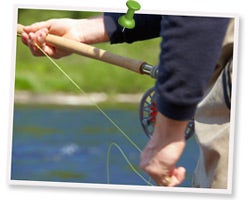
The last decade has changed the way we fly fish for salmon almost beyond recognition. There has probably been greater experimentation and development in this area of the sport than any other. This has led to three distinct styles of modern spey casting evolving and has made tackle choice a little more complicated than it used to be. To optimise your choice of rod you need to consider the type of rivers you will be fishing and the style of casting you will use.
Having said that, the boundaries between these two types of rod are becoming increasingly blurred. New carbon fibre technologies allow faster tip recovery to be a feature of through actioned rods.
Casting Styles and the Best Rod Choice for Each
These are:-
- Traditional Speycasting – This has more in common with casting the doubletaper fly lines of yesteryear in as much as a full length line is used. Today a purpose designed speycasting line is matched with a through-action rod that loads deep into the blank. This is an elegant style of casting at its best with floating and intermediate sinking lines. Full length fly lines with long fast sinking belly sections are more challenging to cast in this style.
- Scandinavian/Shooting Head – This style has really come to the fore in recent years and has a lot going for it. A short shooting head fly line (10-14m) is attached to a thin running line and allows efficient casts to be made with a more tip-action orientated rod and a punchy casting style focused on low effort power strokes driven by the bottom hand. This is an easy way to fish sunk lines as the short lengths of line on the water at the point of recasting are easily controlled.
- Skagit Casting – Again another new style, this time from the USA using a fly line with a short thick belly floating (our intermediate) section to cast fast sinking tips and large flies. A new suite of casts have been developed to go with these lines including the Perry Poke, Circle ‘C’ and Snap ‘T’. These are termed ‘sustained anchor casts’ and have the advantage of being less timing critical than other speycasts. Although this style lacks some elegance and delicacy it more than makes up for this by its ability to overcome difficult bankside conditions and awkward winds. Rods need to have a softer tip and load deeply to maximise the efficiency of this style. Like all sports, a lesson from a professional instructor will help your development. Our instructors have a comprehensive understanding of all casting styles and can help you choose the correct tackle and how to get the most out of it.
Which Rod Length?
Not long ago 15ft was the default for most salmon rods sold in this country. Today an increasingly high proportion of sales are taken by 14ft models as anglers realise that the longer rod will not help them in most conditions. In fact, the lighter weight will keep them fishing effectively for longer in any given day. 13ft rods are popular for smaller rivers and low water conditions.
Like most kinds of fishing you will find that trying to use the same rod in every situation will compromise your enjoyment and performance. Most anglers have a small armoury of rods from which to choose the right tool for the given conditions.
The table below will give you an idea what will be best for the kind of river and the time of year you intend to fish.
|
High water spring or autumn big river - eg Tay, Tweed
|
15ft
|
|
Low water summer, big river - eg Spey
|
13ft or 14ft
|
|
Small spate river, after summer flood - eg Taw
|
13ft
|
|
Medium river, normal flow - eg Wye
|
14ft
|
|
Sea trout medium river - eg Dovey
|
13ft
|
|
Grilse fishing, summer flow, big river - eg Aberdeen Dee
|
14ft
|
Guide by Sportfish expert Allan Shephard AAPGAI
Still need help?
For more help and information on purchasing your new double-handed rod please contact Sportfish on 01544 327111 or danny.north@sportfish.co.uk


Double-Handed Fly Rods Guide
Newcomers to salmon fishing, and particularly those who have trout fished, will often ask why it is necessary to use a double-handed rod. The answer to this is firstly that in certain instances it’s not! Small rivers, lochs and big rivers in very low water are often better approached with a single-handed rod - say a 10’ 7wt. This will allow a more gentle presentation of the fly at close quarters in shallow water.
However, double-handers come into their own when you need to lift longer lengths of line, control and mend the line as it crosses the stream and fish with large heavy flies. Most DH rod ranges include models from 13’ through to 15’, longer rods are available but increasingly the trend is towards shorter lighter rods. The main reason for this is the huge improvements that have been made in speycasting lines in all their various styles making it easy to cast good fishing distances with the minimum of physical effort.
What is a Switch Rod?
Switch Rods are a relatively new concept and have become very popular in recent years. In reality there are only two groups of fly rods – single and double-handed. Switch rods are short double-handed rods (11’-12’) that give the option of casting single-handed should the need arise (hence ‘switch’). Any salmon or sea-trout angler will find a switch rod a useful addition to their armoury, and get much enjoyment using these lightweight and versatile double-handed rods, particularly on smaller rivers.
Which Double-Handed Rod Should I Choose?
The last decade has changed the way we fly fish for salmon almost beyond recognition. There has probably been greater experimentation and development in this area of the sport than any other. This has led to three distinct styles of modern spey casting evolving and has made tackle choice a little more complicated than it used to be. To optimise your choice of rod you need to consider the type of rivers you will be fishing and the style of casting you will use.
Having said that, the boundaries between these two types of rod are becoming increasingly blurred. New carbon fibre technologies allow faster tip recovery to be a feature of through actioned rods.
Casting Styles and the Best Rod Choice for Each
These are:-
- Traditional Speycasting – This has more in common with casting the doubletaper fly lines of yesteryear in as much as a full length line is used. Today a purpose designed speycasting line is matched with a through-action rod that loads deep into the blank. This is an elegant style of casting at its best with floating and intermediate sinking lines. Full length fly lines with long fast sinking belly sections are more challenging to cast in this style.
- Scandinavian/Shooting Head – This style has really come to the fore in recent years and has a lot going for it. A short shooting head fly line (10-14m) is attached to a thin running line and allows efficient casts to be made with a more tip-action orientated rod and a punchy casting style focused on low effort power strokes driven by the bottom hand. This is an easy way to fish sunk lines as the short lengths of line on the water at the point of recasting are easily controlled.
- Skagit Casting – Again another new style, this time from the USA using a fly line with a short thick belly floating (our intermediate) section to cast fast sinking tips and large flies. A new suite of casts have been developed to go with these lines including the Perry Poke, Circle ‘C’ and Snap ‘T’. These are termed ‘sustained anchor casts’ and have the advantage of being less timing critical than other speycasts. Although this style lacks some elegance and delicacy it more than makes up for this by its ability to overcome difficult bankside conditions and awkward winds. Rods need to have a softer tip and load deeply to maximise the efficiency of this style. Like all sports, a lesson from a professional instructor will help your development. Our instructors have a comprehensive understanding of all casting styles and can help you choose the correct tackle and how to get the most out of it.
Which Rod Length?
Not long ago 15ft was the default for most salmon rods sold in this country. Today an increasingly high proportion of sales are taken by 14ft models as anglers realise that the longer rod will not help them in most conditions. In fact, the lighter weight will keep them fishing effectively for longer in any given day. 13ft rods are popular for smaller rivers and low water conditions.
Like most kinds of fishing you will find that trying to use the same rod in every situation will compromise your enjoyment and performance. Most anglers have a small armoury of rods from which to choose the right tool for the given conditions.
The table below will give you an idea what will be best for the kind of river and the time of year you intend to fish:
Fishing Scenario |
Rod Length |
| High water spring or autumn big river - eg Tay, Tweed | 15ft |
| Low water summer, big river - eg Spey | 13ft or 14ft |
| Small spate river, after summer flood - eg Taw | 13ft |
| Medium river, normal flow - eg Wye | 14ft |
| Sea trout medium river - eg Dovey | 13ft |
| Grilse fishing, summer flow, big river - eg Aberdeen Dee | 14ft |
Guide by Sportfish expert Allan Shephard AAPGAI
Still need help?
For more help and information on purchasing your new double-handed rod please contact Sportfish on 01544 327111 or danny.north@sportfish.co.uk
DISCOVER OUR RANGE OF DOUBLE-HANDED FLY RODS
-
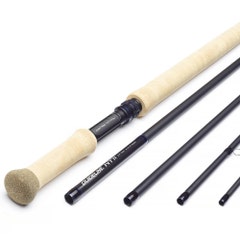 Guideline NT11 Double Handed Travel Fly RodPrice from Price from £939.00
 -
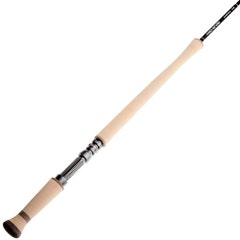 Mackenzie FX2 Graphene Atlas Travel Fly RodPrice from Price from £1,039.00
 -
 Mackenzie FX2 Graphene Switch and Double Handed Fly RodPrice from Price from £849.00
 -
-
 Greys Kite Switch and Double Handed Fly RodPrice from Price from £299.00
 -
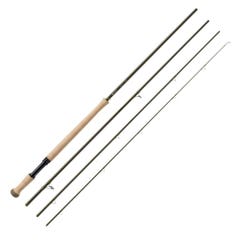 Hardy Aydon Switch and Double Handed Fly RodPrice from Price from £479.00
 -

-
 Hardy Ultralite Switch and Double Handed Fly RodPrice from Price from £689.00
 -
 Shakespeare Oracle 2 Switch and Double Handed Fly RodPrice from Price from £122.99
 -
 Mackenzie DTX NX1 Atlas Travel Double Handed Fly RodPrice from Price from £589.00
 -
 Sage Sonic Switch and Double Handed Fly RodPrice from Price from £849.00
 -