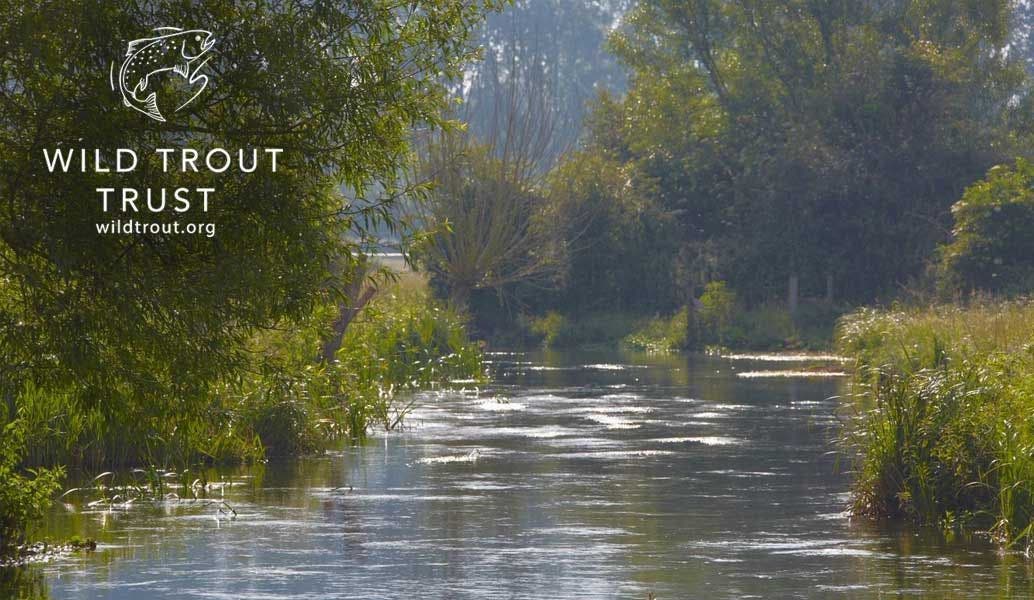
As long-standing supporters of the Wild Trout Trust, we're always fascinated to see how practical conservation work can help wild trout and the rivers they depend on. In this latest update, WTT's Theo Pike explains how restoring habitat on Cambridgeshire's River Mel led to an unusual next step... carefully translocating wild brown trout to help establish a new population upstream of an impassable historic mill weir.
Every year the Wild Trout Trust’s team of Conservation Officers visit many different stretches of river to help advise fishing clubs, landowners and community groups on how to improve these watercourses for wild brown trout and the other animals, birds and insects that live in and around them.
Why Healthy Habitat Matters for Wild Trout
Because wild trout are an ‘indicator species’ for the rest of the environment - in other words, if trout are doing well, so is everything else - we often recommend improving the range of different habitats in the river.
This can include adding gravel to create spawning areas for trout and other fish, introducing woody material (sometimes even whole trees) to create complex currents and provide hideaways from predators, and using fencing to protect the river from livestock that trample and graze the banks too closely, causing excessive bank erosion and river siltation in winter floods. Quite often, we’ll also advise on removing weirs and other in-river barriers, so that different species of fish can migrate upstream and downstream freely to fulfil all the varied needs of their life cycles.

Most of the time, these habitat improvements are enough to adjust the river’s natural balance, and help wild trout and other fish to make a comeback. But under some very specific circumstances, there’s one other intervention that can also help - and it’s one we’ve been trialling for the past three years on a beautiful little chalkstream in Cambridgeshire.
Restoring Wild Trout to the River Mel
The upper River Mel used to have a healthy population of wild trout, but they gradually vanished due to a combination of pressures including low flows, siltation, overshading and general habitat loss.
In recent years, WTT has worked with local organisations like the River Mel Restoration Group, Melbourn Parish Council and South Cambridgeshire District Council to solve these problems through some of the interventions mentioned above. This has included adding hundreds of tonnes of chalk and gravel to recreate natural pools and riffles, which immediately benefited the resident bullheads and sticklebacks.

After all this work, however, the trout were still missing. This was because of an historic water mill and weir at Meldreth, a local heritage feature which still fragments the river’s course, and prevents wild fish from naturally making their way back upstream and into this perfect new habitat.
At the Wild Trout Trust, we always prefer to remove in-river structures like these so that trout can recolonise areas further upstream on their own. In this case, however, the weir couldn’t be demolished or even be modified with a fish pass, and there wasn’t enough space to create a bypass channel around the mill as an alternative option.
Why Translocate Wild Trout?
After carefully reviewing all the possibilities with his local Environment Agency (EA) fisheries team, our Conservation Officer Rob Mungovan decided that the only solution was to try something unusual: to capture wild trout from downstream, and physically transport them a short distance upstream of the mill.
This is the journey that the trout would make themselves, if their route hadn’t been blocked. And it’s also a much better option than stocking trout from a fish farm, because the wild trout have already evolved the best characteristics to survive and thrive in their natural environment.
Rob’s local EA team kindly lent their support and expertise, using specialised electrofishing equipment to capture the trout, and leading on physically moving them upstream. This work has now been carried out three years in a row, moving around 25 trout each time, and we’re seeing positive signs that the new population is successfully becoming established. Local people say they’ve noticed fish, and Rob has found evidence of at least one redd (a nest where a female trout lays her eggs) having been made after the second year of translocation.


Taking Trout Translocation to Other Rivers
Encouraged by the success of Rob’s project, we’ve also started trialling this translocation process on a river in Somerset, after working with the EA and Westcountry Rivers Trust to undertake genetic research into different trout populations around the area. Our eventual aim is to return wild trout and bullheads to a highly-fragmented urban river where all the fish were killed by many years of pollution, but recent water quality improvements now mean that we can try to bring these flagship species back home.
As Rob says:
“People like to see fish in rivers, and when they can’t, it really feels like there’s something missing.”
In the case of the upper Mel, and maybe our Somerset river, not anymore!
Watch: Restoring Wild Trout to the River Mel
You can watch our video about Rob’s work with local project partners to restore habitat and return wild trout to the River Mel:
If you manage a stretch of river where you think habitat improvement might help wild trout and other wildlife, please get in touch for an Advisory Visit - they are free in England and as low-cost as possible across the rest of the UK!